Choosing terrarium SIZE for ground TURTLES
What size terrarium does my tortoise need?
House your turtle in the largest enclosure possible.
Remember that we always end up falling short in choosing the correct size of terrarium.
When choosing the size of the terrarium, we should not be guided by the hole left by the furniture where it is going to be placed or by the available space, the needs of the animal must be taken into account mainly according to the species, age/size. The ideal is to think about the size it will have as an adult or if we will put another specimen in the future, so we know the surface it will need and we can, if possible, acquire the final terrarium, thus saving possible future expenses when having to change for a larger size.

Factors involved when choosing the dimensions of the terrarium:
- the species
- The number of copies
- The time I want it to last to avoid future changes.
- The male/female ratio of the group that we maintain.
So what size do I need? You're in luck... here at www.terrariosdepvc.es we offer the possibility of expanding your terrarium in the future. So that if you now buy, for example, 100x50x50 (appropriate size for testudo, Russian or carbonaria tortoises, among others) you can expand the size in a few years with another, for example of the same size, to 200x50x50, which would serve as the final one. This is possible to do with any size of terrarium.
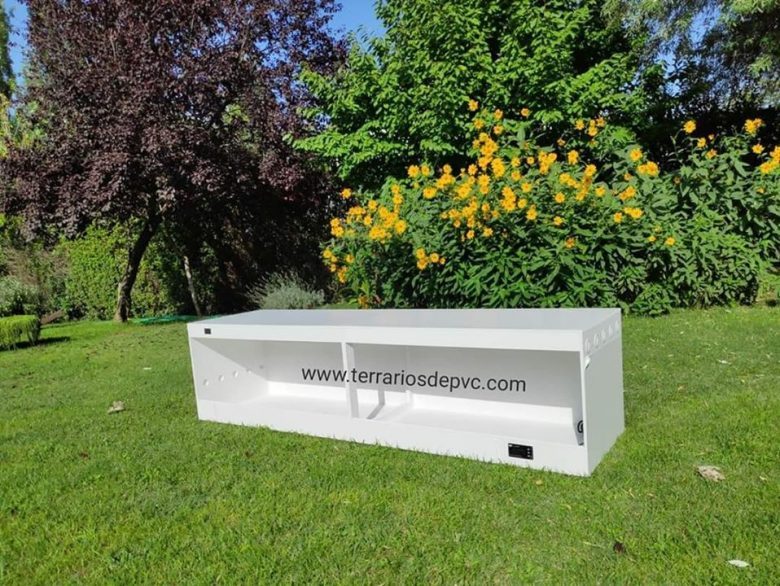
In turtles, the surface area is much more important than the height, but that is why we should not minimize the importance of the height, because depending on this we can put a higher or lower level of substrate, there are species that love to dig to bury themselves, to sleeping or just digging. Another important aspect is in adult specimens, if we maintain a reproductive group we must give a minimum height of substrate for egg laying.
But the most important aspect is to be able to properly place the bulbs because depending on the manufacturer, it will require one height or another to be effective UVB UVA radiation.
For young specimens we can opt for 40cm high terrariums, but for subadults or adults it will be necessary to opt for 50cm or higher.

Good ventilation in the terrarium is of vital importance, both in terms of the size of the grids and their positions, because thanks to this we can avoid future problems with maintaining the appropriate level of humidity, temperature, air renewal...
At www.terrariosdepvc.es we study each case to offer the best ventilation to make it easier for you to maintain the temperature and humidity parameters in a simple and efficient way. Thanks to the position of our ventilations we achieve a constant air renewal.

we can manufacture custom terrariums so you have no excuse for offering your turtle the right size terrarium for it. We also have standard measurements ready to ship so you can have it quickly. We know that on many occasions we obtain the animals without having the facilities prepared and sometimes even without having the facilities. We strongly recommend keeping the terrarium 5-7 days before keeping the turtle in order to establish the appropriate and stable temperature and humidity parameters.
SPECIES:
There are very few tortoises that are suitable for keeping indoors because of the large space they need. In most species, keeping outdoors is the most recommended , especially if we are considering species such as leopard tortoises ( Geochelone pardalis ), spurred tortoise ( Geochelone sulcata ), red-footed or yellow-footed tortoises ( Geochelone carbonaria and G. denticulata ), radiata tortoise or if the budget allows us, Gigantea Albadra, which is undoubtedly the largest species that we can legally obtain in Spain.

All will require much more indoor (and outdoor) space than most people are prepared for or able to provide. So the first rule of thumb is to do some proper research before keeping a tortoise and make sure that you will not only be able to provide adequate space now (for a 5cm hatchling) but also be able to provide adequate space and facilities . in 10 years, when they are 50cm (sulcatas for example) and they need large amounts of food daily.
The most common species:
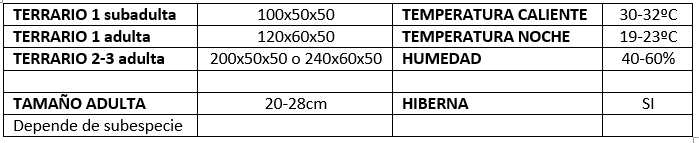
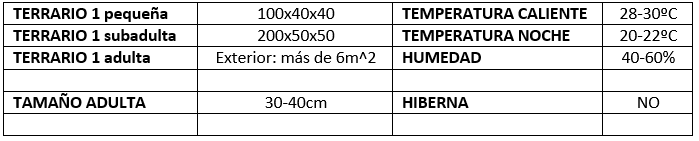
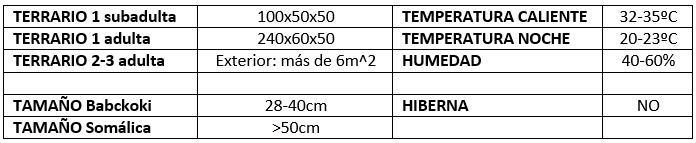
The following tables specify the sizes of the appropriate interior terrariums for each species and according to the ones that are going to be included:
- A small specimen or subadult.
- An adult specimen
- A group of 2 to 3 adult specimens.
The appropriate temperatures are also discussed, both for the day at the hot spot and at night. As well as the value of the relative humidity appropriate for each species, if it hibernates or not and the size that such species reaches as an adult.
-
Agrionemys Horsfieldi: ( Russian Tortoise )


One of the most common species for being one of the cheapest and the large number that have been imported in recent years.
The appropriate size for a small or subadult turtle is 100x50x50, for adult specimens we must take into account the number of turtles: a turtle will be fine in a 120x60x50 terrarium but for 2 or more it will be convenient to choose 200x50x50 or 240x60x50 for example.
Russian tortoises need a hot spot daytime temperature of 30-32ºC . For the night it will be necessary to have a temperature of 19-23 degrees.
The humidity for Agrionemys Horsfieldii should be 40-60% , this is considered medium humidity and we can achieve it effortlessly by choosing the substrate, proper ventilation and the correct placement of the drinker.
They reach a size of around 15cm for males and 18-22 for females.
-
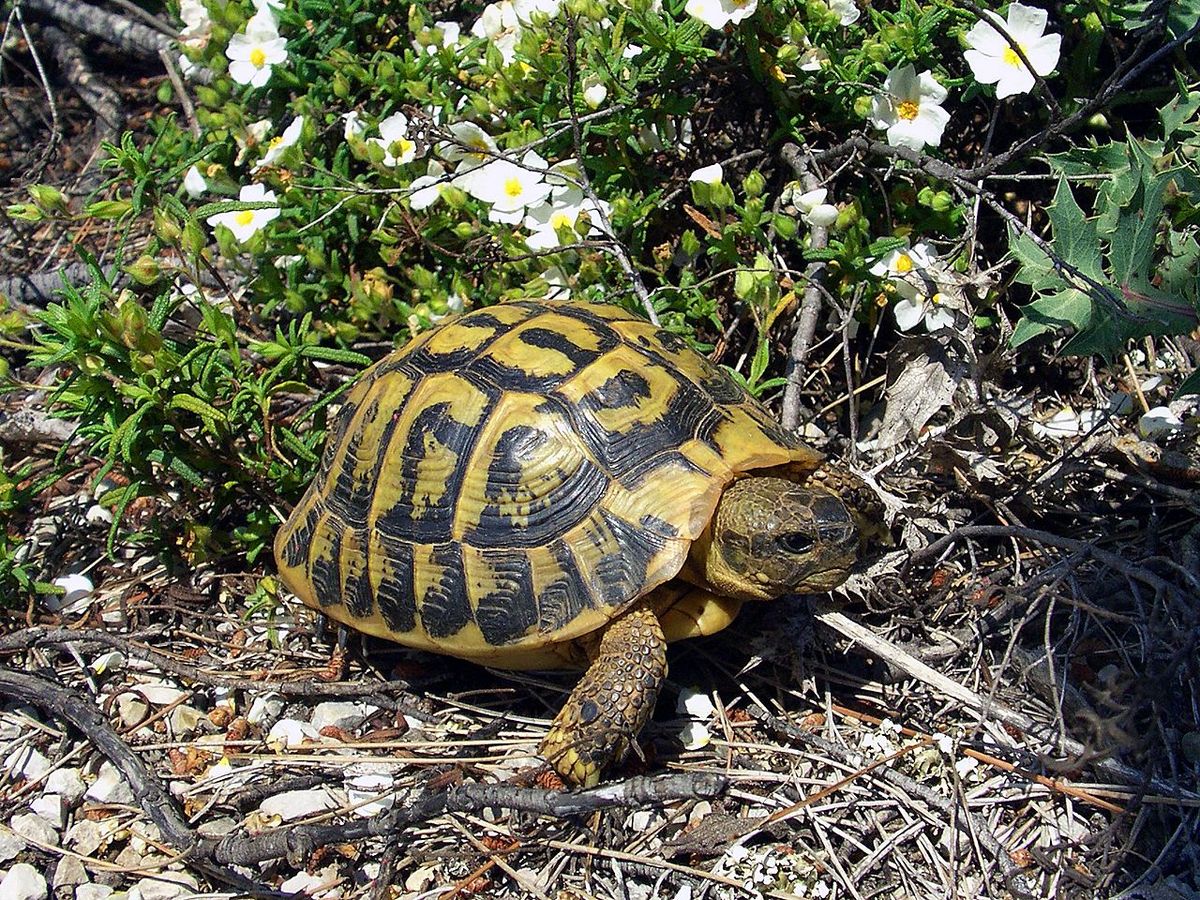
Testudo hermanni hermanni ( Mediterranean tortoise)

-
Testudo Marginata (Greek Tortoise)


-
Testudo Graeca (Moorish tortoise)

-
Testudo Kleinmanni (Egyptian tortoise)


-
Astrochelys radiata

-
Geochelone Sulcata (spurred tortoise)

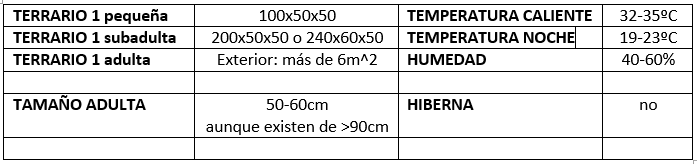
-
Geochelone elegans (star tortoise)

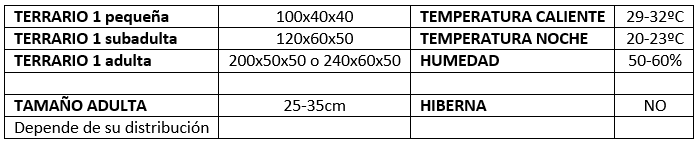
-
Chelonoidis carbonaria (red-footed tortoise)
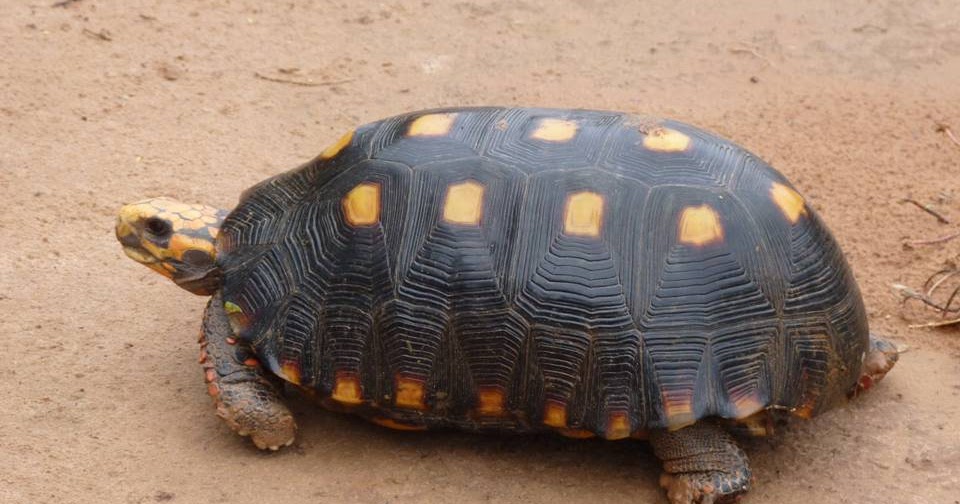

-
Stigmochelys pardalis (leopard tortoise)
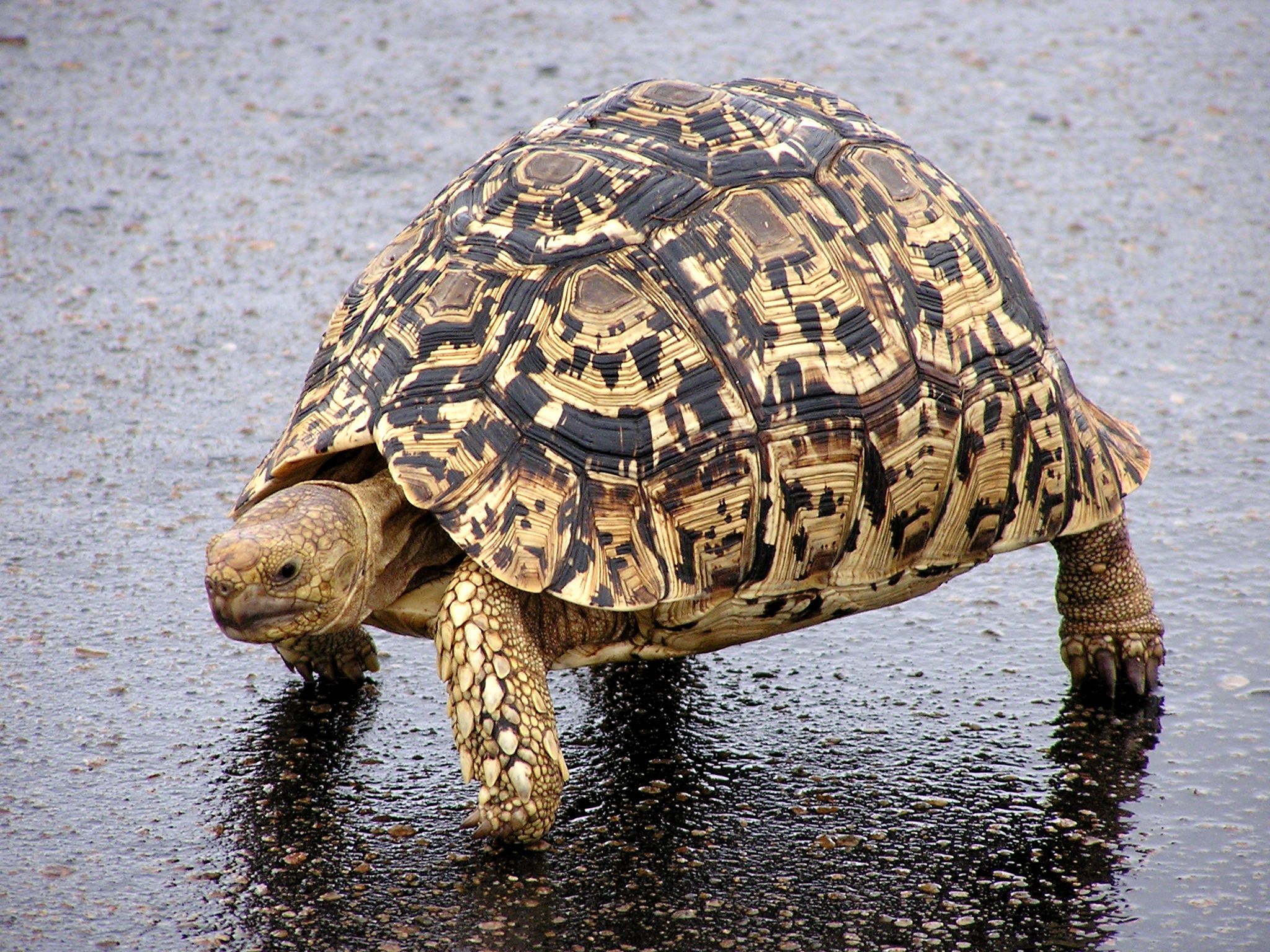
-
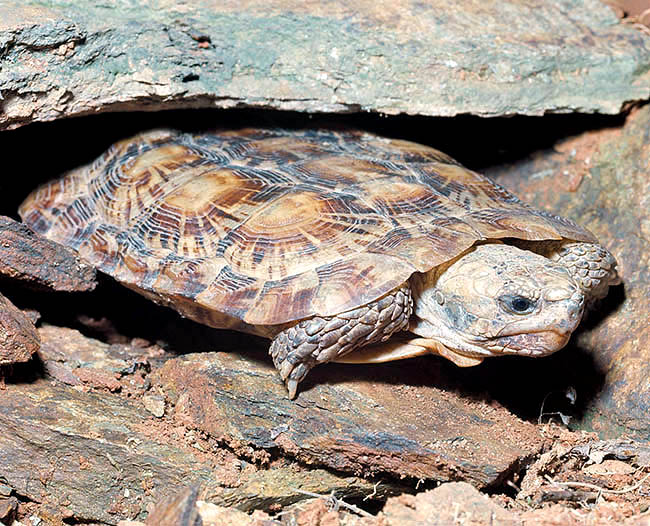
Malacochersus Tornieri

The key word once again is "space". The more space you can provide, the better.